what is an irish pub: it’s a community-centered public house shaped by Irish hospitality, conversation, music, food, and drinking rituals. It differs from a regular bar because the social setting matters as much as the pint, from friendly banter to patient service and respect for local customs. If you walk into one in Dublin, Boston, or far beyond Ireland, look past the shamrocks and ask whether the place feels lived-in, welcoming, and rooted in shared company.
What Is An Irish Pub?
An Irish pub is a public house built around hospitality, conversation, music, and a steady sense of welcome. In pub culture in ireland, the room itself often matters as much as the drink: a bar counter for ordering, tables for lingering, familiar faces, and staff who can steer you toward a pint, a meal, or a quiet corner.
A regular bar may focus mainly on drinks, speed, volume, or nightlife. An Irish pub usually has a slower social rhythm. You might hear music, meet strangers, watch regulars greet staff by name, or share a table during a crowded evening. But here’s the thing. The best ones feel social without feeling staged.
Irish Pub Meaning As A Community-Centered Public House
The older idea of a public house helps answer a common question: are pubs irish by origin? Not exclusively, but Ireland developed a distinct version where the pub became a local meeting room, informal dining room, music space, and storytelling corner. The Irish character comes from use, not just ownership or decoration.
Where The Irish Pub Came From
The Irish pub grew from the role of the public house as a local meeting place. Before modern entertainment, it gave people somewhere to exchange news, mark occasions, hear music, and do business informally. That helps explain the irish pub meaning today: a shared social room rather than only a place to buy alcohol.
That role carried from village life into modern hospitality. In Dublin, a pub may serve office workers after work, tourists after sightseeing, and regulars who sit in the same corner every week. The Irish Pub Company’s history of Irish pubs is useful background on how design and pub history connect.
Public House Tradition In Ireland
The public house tradition in Ireland is practical and personal. A good pub gives you shelter, drink, talk, warmth, and a sense of belonging, even if you’re only visiting. Lists of famous irish pubs often focus on landmarks, but smaller neighborhood rooms can show the same tradition more clearly through regulars, staff memory, and unforced hospitality.
How Irish Pub Culture Spread Around The World
Irish emigration carried pub customs far beyond Ireland. The Irish diaspora opened, staffed, and inspired pubs in cities where people wanted familiar music, stout, whiskey, sports, and conversation. In some places, an irish music session became the clearest signal that the pub was more than a themed drinking room.
Here’s where it gets interesting. Global examples vary widely. St. Pat’s Irish Pub presents the pub as a friendly gathering place, while The Lansdowne Pub in Boston connects the idea to neighborhood identity and live entertainment. Tenon Tours’ characteristics of an authentic Irish pub also shows how travelers look for atmosphere, not just branding.
Irish Diaspora And Global Pub Design
The Irish diaspora also shaped pub design abroad, from dark wood counters to etched glass, snugs, memorabilia, and compact stages. Firms such as Irish Pub Company helped export recognizable interiors. Social customs traveled too, including the round system, where each person in a group takes a turn buying drinks rather than ordering only for themselves.
The Look And Feel Of An Authentic Irish Pub
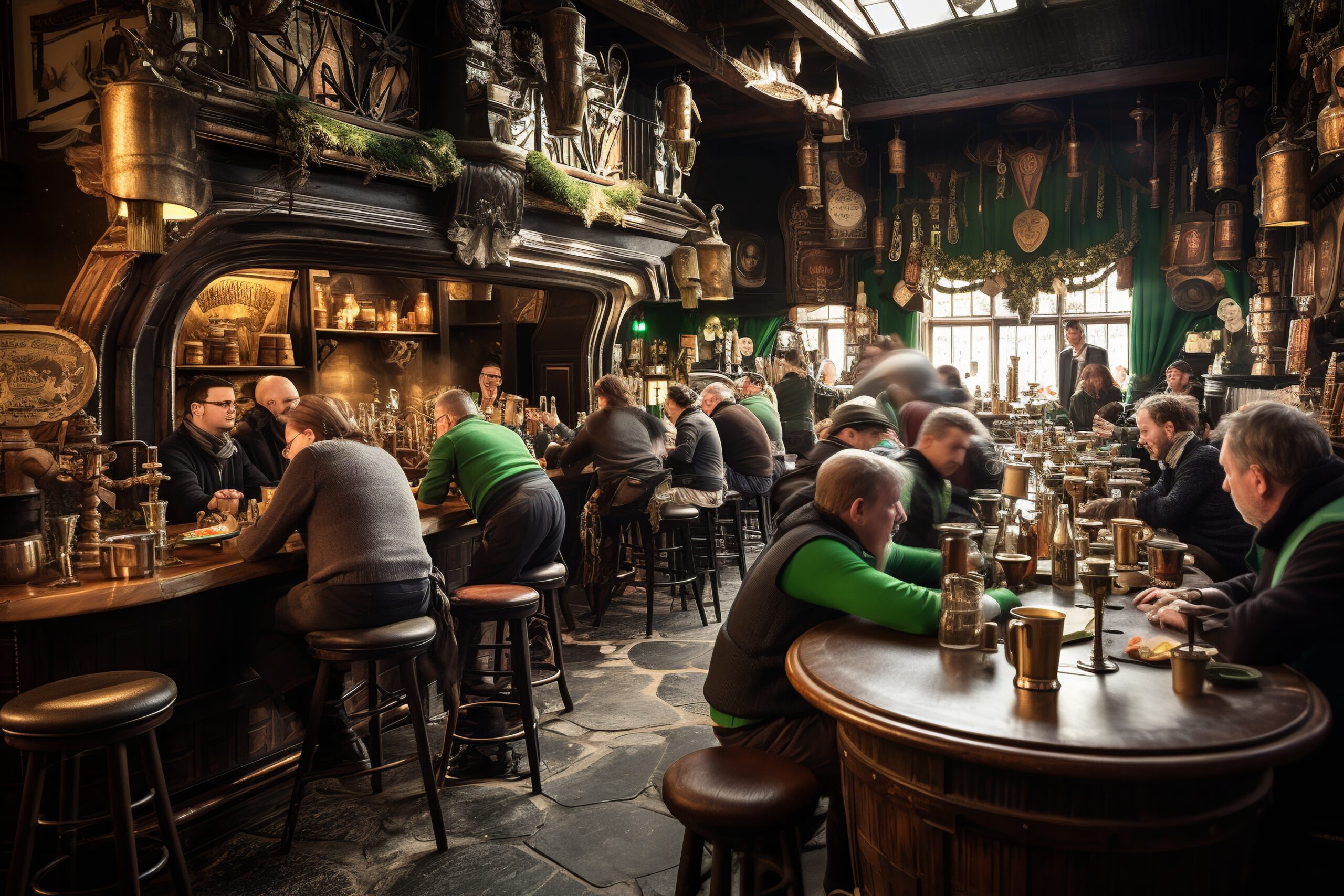
The look often starts with dark wood, low lighting, mirrors, old signs, photos, sports memorabilia, and snug spaces that make conversation easy. The pub atmosphere should feel settled, not freshly assembled for tourists. Traditional music may be part of it, but silence, chatter, or a match on television can be just as natural.
An authentic room usually has friendly staff, local regulars, and details that feel earned over time. A wall of random shamrocks will not do the work by itself. Worth pausing on that for a second. The difference is whether the place invites you to stay, talk, and notice the people around you.
Community, Conversation, And Banter
An authentic Irish pub is comfortable with strangers becoming temporary neighbors. You might hear light teasing, local stories, travel advice, or a quick joke from the bartender. Hospitality does not mean forced formality. It means you can join the room respectfully, share a table when space is tight, and leave with the sense that someone noticed you were there.
Music, Noise, And Liveliness
Music can range from informal sessions to casual singing or full live bands. The sound should support the room, not flatten it. If performers are playing quietly, listen or lower your voice. If the pub is lively, expect chatter and movement, but avoid blocking musicians, shouting over intimate sets, or treating every song as background noise.
Classic Drinks You’ll Find In An Irish Pub
Guinness is the drink many visitors expect first, and stout does carry symbolic weight in Irish pubs. Still, the drink list may include lager, ale, cider, wine, soft drinks, and Irish whiskey. Irish drinks matter because they create shared rituals, from how a pint is poured to how a group orders together.
Service often happens at the bar, especially in Ireland. You order, wait your turn, and give staff time to pour correctly. Patience matters. A rushed pint feels out of step with the room, and a crowded bar rewards calm eye contact, clear ordering, and knowing what you want before you reach the counter.
The Guinness Pour And Pint Ritual
A proper pint of Guinness is usually poured in two stages, with time for the stout to settle before it is topped off. That wait is part of the experience, not bad service. If staff ask you to wait, embrace the Guinness ritual and let the pint finish properly before taking it away.
Whiskey, Beer, And Non-Stout Options
If stout is not for you, ask about whiskey brands, local beers, ales, cider, or soft drinks. Many pubs can recommend a simple pour or a beer that suits your taste. You do not need expert language. Saying “I like something lighter” or “I’m new to whiskey” gives staff enough to help.
Food And Comfort Dishes In Irish Pubs
Pub food overlaps with Irish cuisine, but it is not the whole story of eating in Ireland. A pub menu often favors warm, filling, practical dishes that suit long conversation and a pint. Think stew, fish and chips, pies, sandwiches, soups, and bread rather than a full national food encyclopedia.
If you ask about the most popular food to eat in Ireland, there is no single universal answer for every setting. In pubs, though, hearty dishes tend to dominate because they fit the room. A bowl of stew or a plate of fish and chips makes sense when you want comfort, not ceremony.
Stew Fish And Chips Soda Bread And Hearty Plates
Irish stew is the classic comfort image, usually built around meat, potatoes, carrots, and onions. Fish and chips suits a casual pint. Soda bread may appear with soup or stew, while hearty plates fill the gap between snack and restaurant meal. The best choice is often whatever the kitchen sells steadily to regulars.
How To Behave In An Irish Pub
Good pub etiquette starts with attention. In many Irish pubs, you order drinks at the bar rather than waiting for table service, though food service varies by venue. Stand where staff can see you, wait your turn, and avoid waving money, snapping fingers, or crowding other customers.
Respect the room as much as the menu. Old photos, signs, instruments, and sports items may mean something to regulars. Musicians are not jukeboxes. Staff are not props. So what does that actually mean for you? Be patient, be warm, and let the pub’s pace set your pace.
Understand The Round System
When drinking with a group, people often buy rounds in turn. If someone buys you a drink, you are generally expected to take your turn later. Do not skip your round unless you have clearly opted out early. If you are drinking less, say so before the pattern starts, and buy your own instead.
Join The Banter Without Overdoing It
Light jokes and friendly conversation can be part of the fun, especially at the bar. Keep it easy. Avoid loud, aggressive, or personal comments, and do not force yourself into every exchange. Read the room with locals: if people answer briefly, let them be. If they include you, respond with warmth.
Respect Traditional Music Sessions
During an informal session, musicians may be playing for the room, for each other, or both. Do not interrupt to request songs, touch instruments, or talk loudly through quiet sets. If you arrive during an irish music session, stand back for a minute, watch the tone, then choose your seat and volume accordingly.
Irish Pub Vs Regular Bar: The Practical Difference
The practical difference is purpose. A regular bar can be excellent, but it often centers on drinks, speed, cocktails, screens, or nightlife. An Irish pub usually centers on company first, with decor, music, service style, and pace supporting conversation. The drink is part of the social fabric, not the only reason to enter.
A bar may feel interchangeable if the menu and music changed tomorrow. A good Irish pub feels tied to people and habit. You notice where regulars sit, how staff greet them, what music belongs there, and whether visitors are folded in naturally. Here’s the part most people miss. Authenticity is behavior, not a theme kit.
Community-First Setting Versus Drink-First Venue
In a community-first setting, your best memory may be a conversation, song, meal, or shared joke. In a drink-first venue, your best memory may be the product itself. Neither is wrong. The Irish pub tradition simply asks the room to do more work: host people, hold stories, and make strangers feel less separate.
Common Myths About Irish Pubs
The biggest myth is that shamrocks, green paint, and a Guinness sign automatically make a pub Irish. They can be part of the visual language, but they prove little. The Wikipedia overview of the Irish pub shows the concept has history, customs, and social function beyond decoration.
Forum discussions on Reddit’s Irish pub question thread and Quora’s comparison of Irish pubs and typical bars often circle the same point: Irish pubs can be quiet locals, music venues, restaurants, tourist landmarks, or sports rooms. But there’s a catch. Some are sincere, some are commercial imitations, and many sit somewhere in between.
Not Every Irish Pub Is In Ireland
Irish pubs outside Ireland can still feel genuine when they honor hospitality, music, staff knowledge, and community habits. They can also become caricatures when they rely only on signs and slogans. The Lansdowne Pub frames authenticity through neighborhood energy, while St. Pat’s Irish Pub emphasizes warmth and gathering. Both show how context shapes the idea.
Frequently asked questions
Q1: What is the difference between an Irish pub and a regular pub?
A1: An Irish pub is usually more community-centered, with a stronger focus on conversation, hospitality, music, local character, and shared rituals than a regular pub or bar. A regular venue may still be friendly, but the Irish version tends to make atmosphere and social ease central to the experience.
Q2: Do you seat yourself in Dublin?
A2: In many Dublin pubs, you can seat yourself for drinks, especially if you have ordered at the bar and see an open table. For food, busier pubs may have a host, reserved tables, or staff-directed seating. When unsure, ask at the bar before settling in.
Q3: What is the most popular food to eat in Ireland?
A3: There is no single official most popular food for every person in Ireland, but pub visitors often associate Irish eating with hearty dishes such as stew, fish and chips, soda bread, soups, and potato-based plates. In a pub, comfort and familiarity usually matter more than fine dining.
Q4: What is the #1 beer in Ireland?
A4: Guinness is the beer most strongly associated with Ireland and Irish pubs, especially for visitors ordering stout. Popularity can vary by venue, region, and measure, so avoid treating any one answer as universal. Still, if someone asks for the iconic Irish pint, Guinness is the usual reference point.
Q5: Are pubs Irish by origin, or did Ireland simply develop a distinctive pub tradition?
A5: The question are pubs irish needs a careful answer: pubs are not exclusively Irish by origin, but Ireland developed a distinctive public house tradition with its own habits, music, hospitality, and social role. That tradition became recognizable enough to travel globally through emigrant communities and Irish-inspired venues.
Key takeaways:
- An Irish pub is a social public house, not just a bar with Irish decor.
- Atmosphere, conversation, music, and hospitality are as important as drinks.
- Guinness, Irish whiskey, and the round system are central rituals to explain.
- Authenticity comes from community feel, history, and behavior—not shamrocks alone.
- Global Irish pubs reflect Irish influence but vary widely by city, ownership, and audience.
An Irish pub is best understood as a welcoming social space shaped by Irish history, hospitality, music, conversation, and ritual. If someone asks what is an irish pub, the shortest answer is this: a public house where the room, the people, and the customs matter as much as the drink. Guinness and whiskey play important roles, but the real identity comes from regulars, stories, patience at the bar, respect for music, and the shared rhythm of rounds. Whether in Dublin or abroad, the most convincing Irish pubs feel less like themed bars and more like community rooms where visitors can settle in and take part without pretending.